
Woods County Parole Versus Probation
Parole is conditional release from prison while part of a sentence remains unserved. The Oklahoma Department of Corrections, or ODOC, supervises the person in the community. Probation is court-ordered supervision that may follow a suspended sentence, deferred disposition, or another court outcome. A person can therefore be on probation without first serving a state prison term. Someone who only bonded out of Woods County Jail may have court conditions, but that fact alone does not create an ODOC parole or probation record.
The legal source matters. A Woods County court docket can show that probation was ordered. An ODOC status or discharge record can show the state supervision relationship. Pardon and Parole Board records address parole consideration and results, not every probation case. Use the systems together only when the person’s custody history calls for it.
| Point | Parole | Probation |
|---|---|---|
| How it starts | Conditional release with prison time left | A court places the person under supervision |
| Decision source | Parole process and applicable state action | Judgment, deferred order, or suspended sentence |
| Public check | PPB docket/results, then ODOC status | Court order, then ODOC supervision route |
| How it ends | Discharge or other official end of supervision | Court or ODOC record showing completion or discharge |
- Parole
- Supervised community release while an unserved sentence balance remains.
- Probation
- Court-ordered community supervision instead of, or after, confinement.
- Discharge
- The official end of the sentence or supervision relationship in the agency record.
- Absconder
- A person alleged to have stopped complying with required supervision contact.
Check Woods County Supervision Status
Start with identity, not assumptions. Gather the full name, date of birth, ODOC number if known, and Woods County court case number. Similar names can produce a false match. The ODOC Offender Lookup serves people sentenced to or supervised by ODOC. It does not cover each short Woods County Jail stay. Compare status, sentence court, case data, and photo before relying on a result.
- Search ODOC by name or ODOC number and open only a well-matched record.
- Read the status and note whether it indicates incarceration, parole, probation, or discharge.
- Search the Woods County court case for the signed judgment, deferred order, revocation, or completion entry.
- If parole is possible, find the person on the PPB monthly docket and then open the matching validated results.
- Confirm the assigned P&P office through the current ODOC directory before visiting or reporting.
- For formal discharge proof, ask ODOC Legal Services for the releasable discharge or status record.
A PPB result must be read with care. A nonviolent parole grant differs from a favorable recommendation in a violent-offense case that needs gubernatorial action. “Passed” means moved to later review. “Denied” is not a release. Even favorable action can be followed by conditions, processing, holds, rescission, or another status change. The last step is always the current ODOC record, not the meeting date.
Verification should preserve the custody sequence. A person may leave Woods County Jail for ODOC transport, later reach parole eligibility, and then enter community supervision. Each record answers a different stage. The sheriff register proves how county custody ended. The judgment establishes the sentence. PPB material shows Board action. ODOC status shows whether confinement or supervision followed. Keeping those dates and labels apart prevents a transfer date or favorable vote from being reported as physical release.
Woods County Supervision Offices
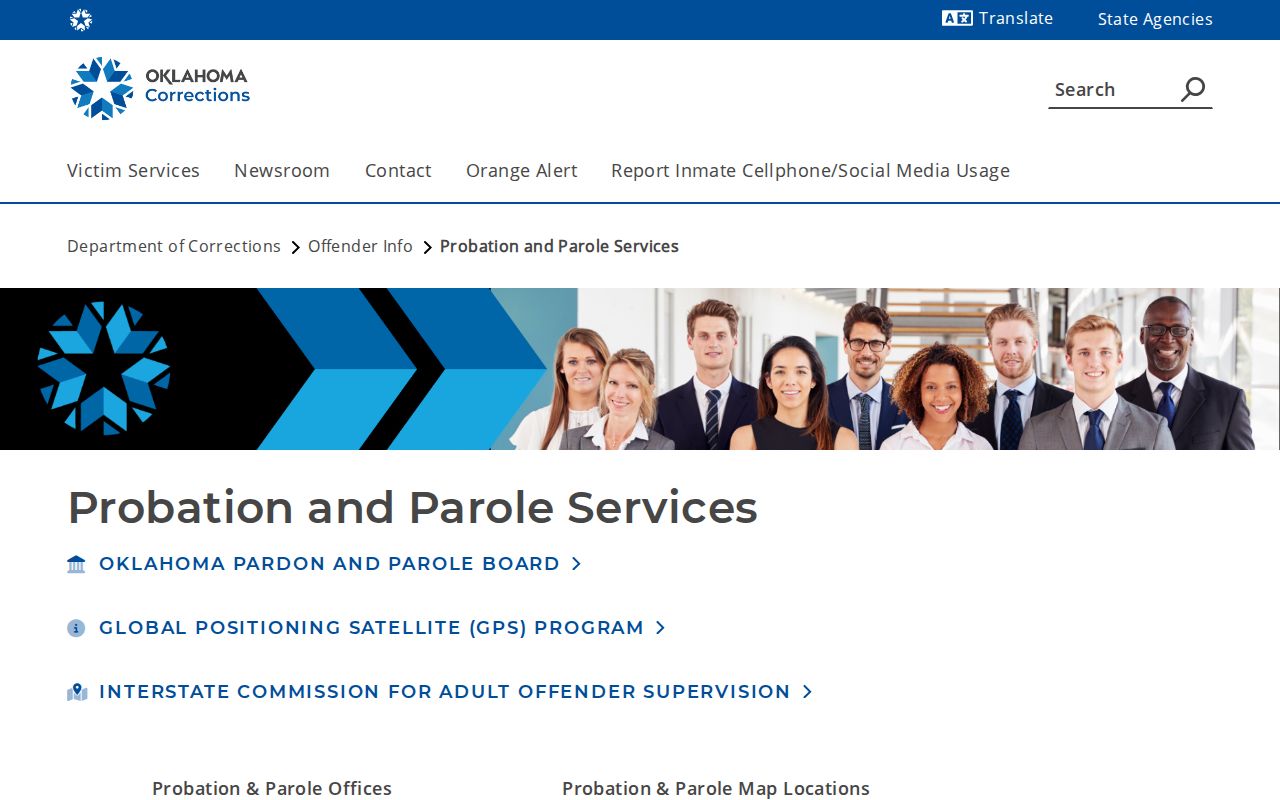
The current ODOC Probation and Parole directory assigns Woods County to the Woodward regional office and also lists an Alva suboffice. An assigned office can depend on the person-specific supervision plan. County of conviction, prior jail, or release facility does not prove where the person must report. Confirm the assignment before appearing, and ask only for public supervision verification.
ODOC Probation and Parole
Woodward office
1104 Hillcrest
Woodward, OK 73801
580-254-1539
Alva suboffice
1856 E. Flynn Street
Alva, OK
Office: 405-727-4357
Cell: 580-383-0079
The directory image below shows the official source used for Woods County office routing. Check the live directory before travel because staffing and assignments can change.
The listed office can explain the public route for a status check. It should not be expected to disclose a person’s residence, schedule, treatment details, or private case plan.
If the directory and a person-specific instruction appear to conflict, follow the assigned instruction and ask ODOC to confirm the public office route. The Alva listing is useful, but it does not prove that every person convicted, held, or released in Woods County reports there. Woodward remains the published regional assignment. Note the date of the directory check because phone numbers and assignments can change.
Woods County Parole Hearing Results
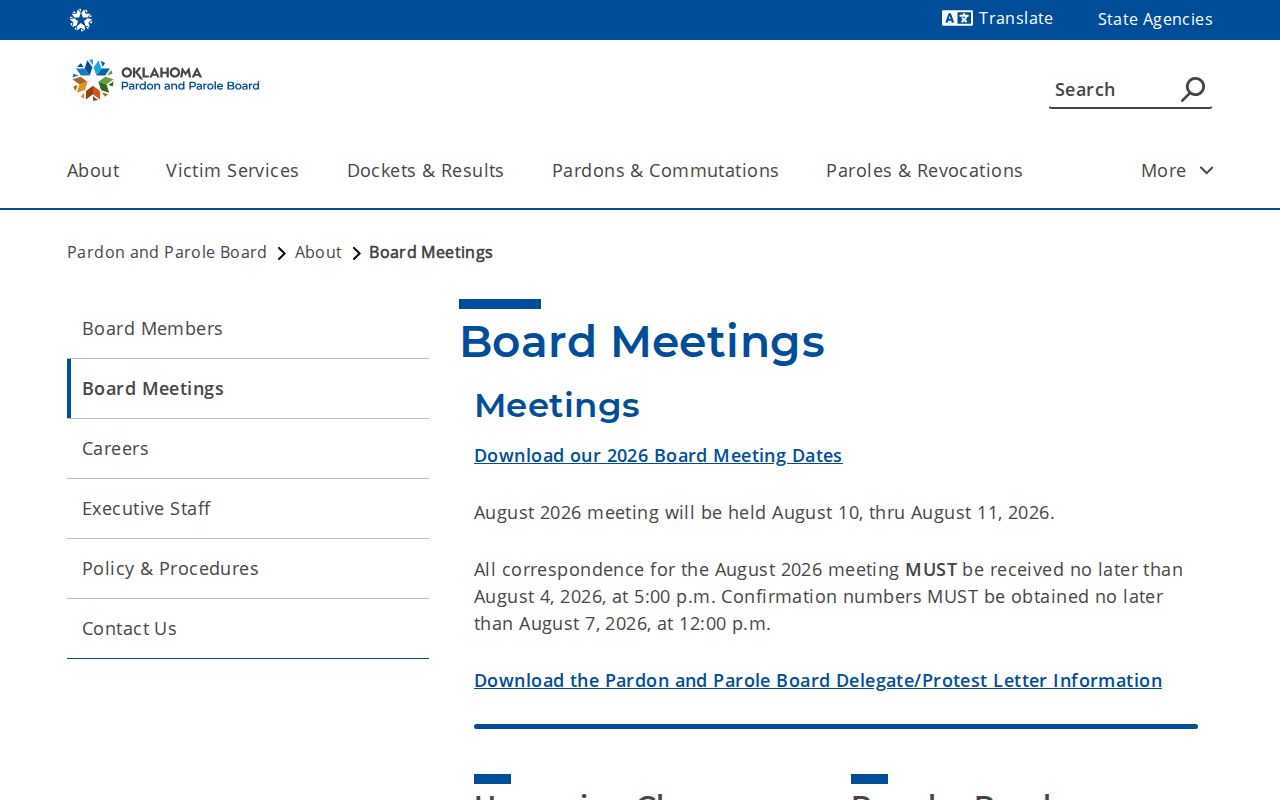
The Oklahoma Pardon and Parole Board meets monthly. Its meeting page gives the calendar, while Dockets & Results groups advance dockets and validated results by month. The docket shows planned consideration. It is not a release list and does not prove that the person left a facility.
First find the person on the right monthly docket. After the meeting, open the corresponding results. Three of five favorable votes form a majority, and votes are not final until adjournment. A nonviolent grant, violent-offense recommendation, pass, denial, or later rescission each has a different effect. The image below is the official Board meeting source, useful for choosing the correct month before reading results.
Eligibility also differs from release. It depends on the offense date, sentence, jail credit, and applicable versions of 57 O.S. §332.7 and 21 O.S. §13.1. A hearing date never substitutes for the later ODOC custody status.
Woods County Supervision Violations
Conditions can include reporting, obeying court and supervision rules, and completing ordered requirements. Details belong to the person’s order and supervision plan. A suspected violation may lead to a warrant, revocation process, or court action, but an allegation is not a final ruling. Parole revocation and probation revocation also follow different legal paths.
An absconder or warrant indicator is not proof of a lawful release. It suggests supervision existed and that compliance is in question. ODOC Fugitive Warrants Division lists 405-425-2570 or 405-425-2571, toll-free 866-363-1119, and warrants@doc.ok.gov. Do not approach a person believed to have an active warrant. Use official law-enforcement channels.
Note: A missing ODOC record does not prove that no supervision exists; verify identity, spelling, court orders, and the correct agency.
BJCC Programs and Woods Supervision
Charles E. “Bill” Johnson Correctional Center makes Woods County supervision questions unusual. The ODOC facility provides substance-use and cognitive-behavior programming, including regimented treatment and an Intermediate Revocation Program. These are facility pathways, not a promise that each person receives a set benefit or identical result.
A BJCC departure can follow an ordinary state sentence, delayed-sentencing completion, or an intermediate revocation placement. Delayed sentencing can lead to dismissal, deferment, or probation depending on the filed court outcome. An intermediate revocation participant may return to supervision without receiving a final discharge. Match the physical departure to the ODOC status and controlling court order. Do not infer that a person leaving a facility in Woods County will be supervised in Woods County.
Correct Woods County Supervision Records
ODOC publishes specific forms when an individual record appears wrong. Forms 060212C, 060212D, and 060212F address review, an individual ODOC-record request, and authorization. Use the form that matches the requester and the record issue. A court error follows a different path through the clerk, and a public website cannot change either government record.
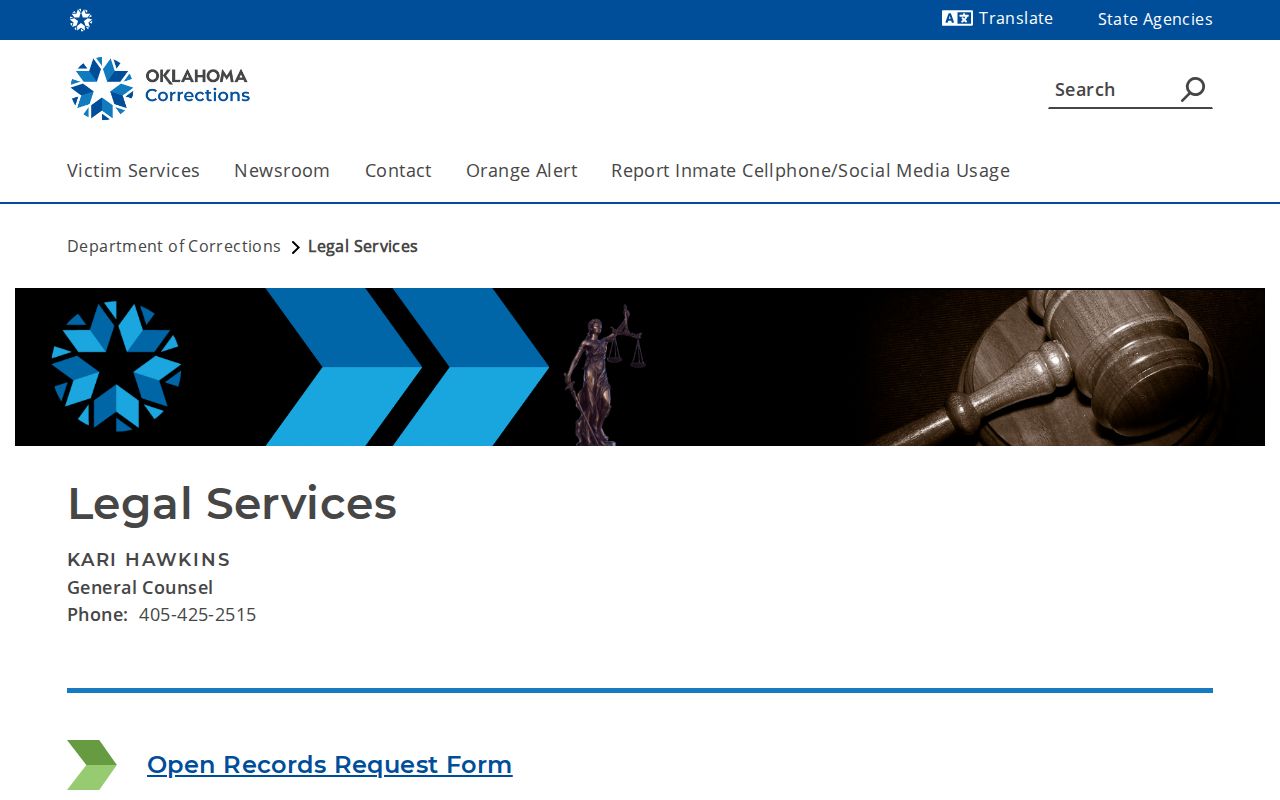
The ODOC Legal Services page lists Closed Records at 405-425-2691, osor@doc.ok.gov for inquiries, and osordischarges@doc.ok.gov for discharges. Ask for existing releasable status or discharge material. Do not demand confidential supervision details or a newly written explanation. The official page shown below identifies the agency route for discharge questions.
Confirm Woods County Supervision Discharge
Supervision ends through an official discharge, completed court outcome, or another controlling action. Physical release, a favorable parole vote, and final discharge are three distinct events. A released person may still report to ODOC, while a discharged person has reached the recorded end of that state relationship. Check for more than one case or hold before making a broad claim.
For a full custody chronology, pair ODOC records with the Woods court judgment and the releasing agency’s record. The Woods County released-inmate search and records path explains how the jail register, court docket, and state status fit together. State the result narrowly: which agency’s custody or supervision ended, when the record says it ended, and whether another custodian or obligation appears.
When records conflict, do not merge dates or guess which screen is newest. Save the lookup date and identify whether each date is a court order, Board result, physical discharge, or final supervision discharge. A court clerk corrects the court file; ODOC reviews its own offender and supervision data. That distinction keeps a correction request from going to an office with no power to make the change.